Properties selling faster than comparable listings share an unexpected common feature—and it’s not granite countertops or smart thermostats.
Each property includes flexible living spaces, integrated outdoor areas, and work-from-home infrastructure. Not as upgrades, but as standard features.
The market is shifting. Construction standards need to shift with it.
The global outdoor living structure market hit $2.35 billion in 2024. IMARC Group projects that it will reach $3.66 billion by 2033, growing at a 5% annual rate.
What Half of All House Plans Now Reveal
In 2025, 50% of all house plans sold ranged from 1,000 to 1,999 square feet. Only 31% measured between 2,000 and 2,999 square feet.
Multi-use rooms make homes live larger than their actual footprint. For most buyers, 1,800 to 2,400 square feet provides open living areas, a private primary suite, and flexible secondary spaces without excess maintenance or cost.
Spaces function as a home office during the week, a guest room on the weekend, or a workout space when needed. 54% of professionals expect homeowners to increase renovation spending in 2026, driven by demand for tech-integrated homes, indoor-outdoor harmony, and flexible layouts.
The Rosebank villa’s two living areas. The UK property’s garden room. The family home’s bonus room.
Construction standards, not selling points.
The Outdoor Living Demand Reshaping Residential Design
Outdoor kitchens have emerged as a top priority for homeowners, with over half of architects reporting increased client demand. North America dominates the outdoor living structures market, accounting for over 48.5% of the global market share.
The impact on property value is measurable: 98% of industry experts agree that an updated outdoor living space significantly impacts home value. Homeowners are willing to spend a quarter of their home improvement budget on creating outdoor living spaces.
Properties without outdoor spaces sit longer on the market.
The Indoor-Outdoor Trend Changing Floor Plans
Industry experts report that seamless indoor-outdoor connectivity has become the dominant design trend, with a majority prioritizing visual coherence between interior spaces and outdoor living areas.
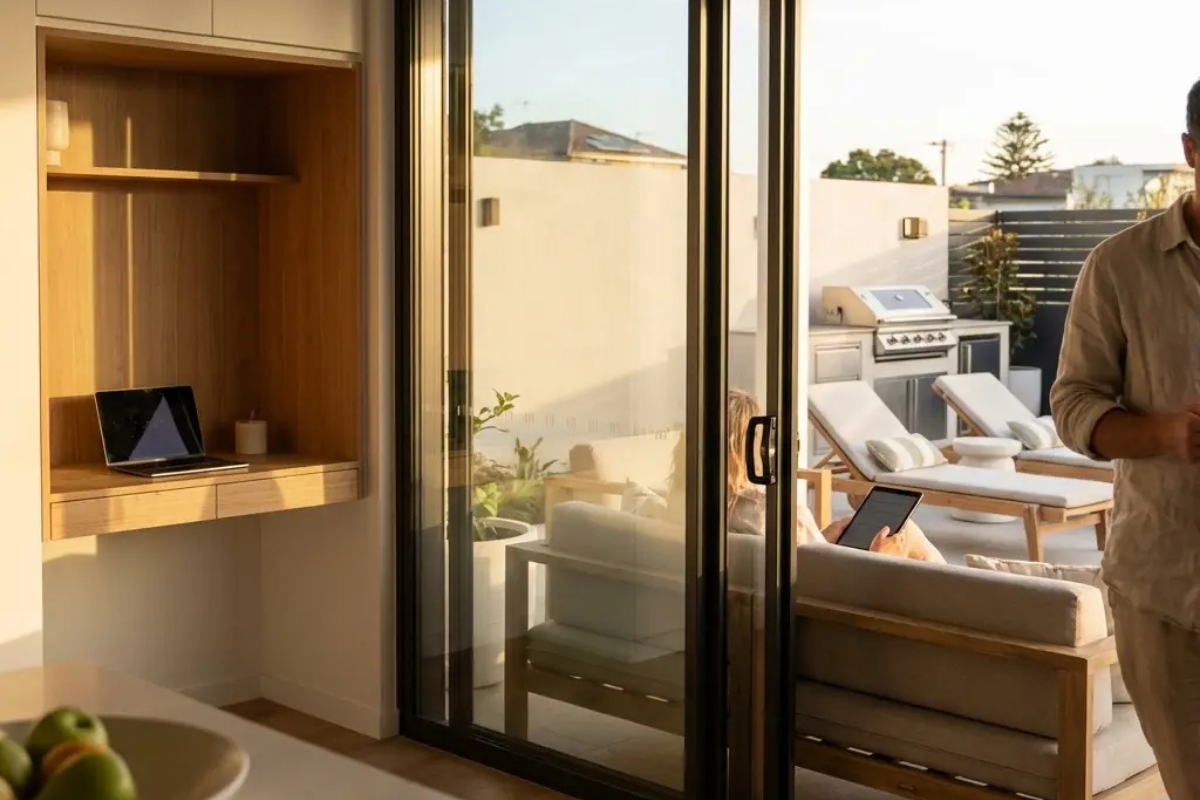
Floor plans blur the line between indoors and outdoors, expanding livable space and increasing entertainment capacity.
Outdoor living expanded from decks, patios, and grills to outdoor kitchens and fully furnished outdoor rooms, driven by lifestyle expectations, not aesthetics.
Architects and builders report demand for character, flexibility, and spaces that support everyday living.
Properties are designed for how people live, not how marketing materials suggest they should.
The Remote Work Signal You Can’t Ignore
Research from Stanford University, the University of Chicago, and Instituto Tecnológico Autónomo de México found that employees value the option of staying home more than an increased salary. They equate remote policies to an 8% pay raise.
Properties now feature CAT6 cabling throughout, with hardwired data ports in all bedrooms and study areas. Floor boxes provide Ethernet access at the desk level.
Most hybrid or home working roles require computer work. Purpose-designed study rooms provide privacy and separation that converted bedrooms or kitchen tables can’t.
Home offices are essential infrastructure, like electrical and plumbing systems.
What 64% of Homeowners Are Actually Asking For
64% of homeowners want multi-functional outdoor spaces, according to the National Association of Realtors.
Luxury estates incorporate flexible floor plans with self-contained suites, guest cottages, and dual master bedrooms. The trend extends beyond high-end construction.
Multi-functional design is a baseline expectation across price points, property types, and geographic markets. Properties with flexible living areas, outdoor space, and move-in readiness outperform comparable listings treating these as optional.
The Standards Shift Construction Pros Need to Recognize
2026 layouts use architectural elements to define zones without compromising openness. A shift in residential construction standards, driven by measurable market demand.
The market signal is measurable: a $3.66 billion outdoor living structure market by 2033, widespread architect demand for integrated outdoor spaces, a dominant focus on indoor-outdoor coherence, and 64% of homeowners demanding multi-functional outdoor spaces.
Construction pros face a choice: integrate flexible living spaces, work-from-home infrastructure, and outdoor areas as baseline features, or add them as expensive afterthoughts when buyers request them.
Properties with these features built in from the planning stage sell faster and command premium prices. Properties treating them as optional upgrades sit longer on the market.
The shift is happening now. The question isn’t whether to adapt—it’s whether you’re ahead of the curve or behind it.