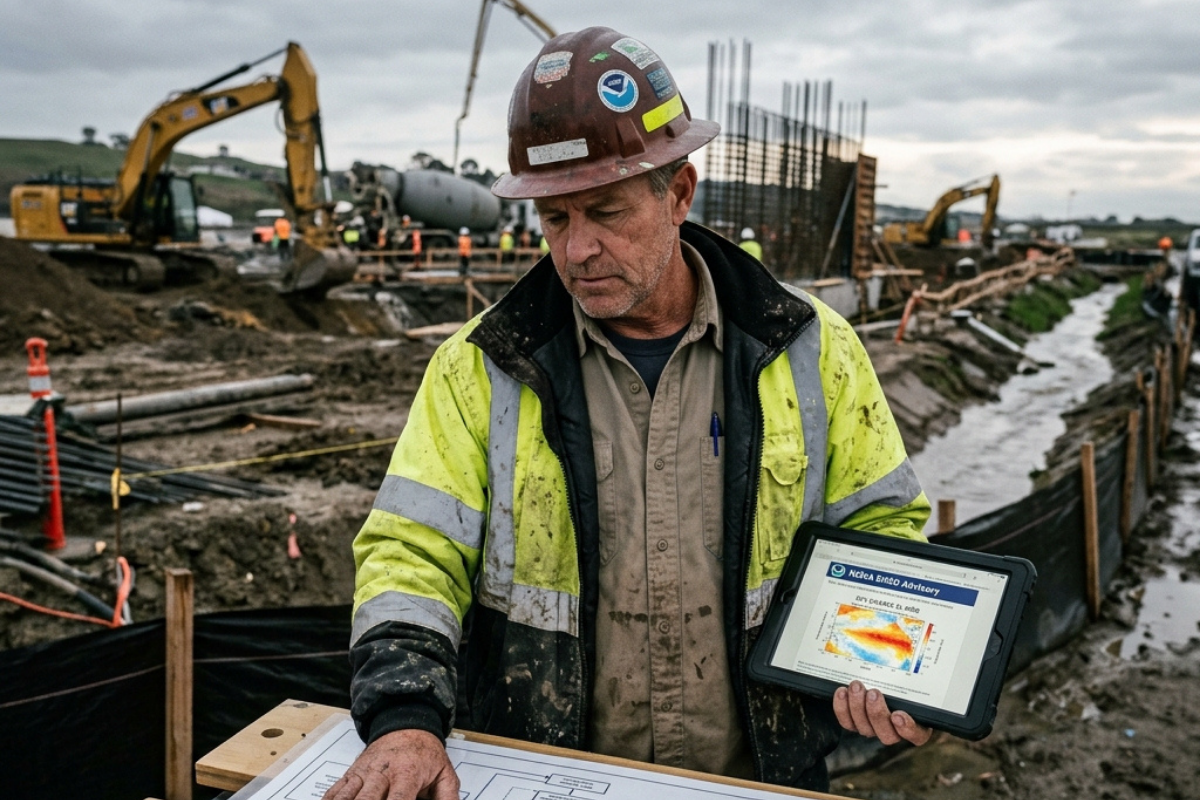
NOAA just put a number on what’s coming: 82 percent chance of El Niño by summer, with a 2-in-3 probability it reaches Super El Niño strength by year’s end.
If you’re managing projects scheduled into late 2026 or 2027, this forecast will cost you money unless you start planning today.
Pacific conditions are developing faster than expected. NOAA puts the probability of El Niño forming between May and July 2026 at 82 percent, with a 96 percent chance it persists through the Northern Hemisphere winter 2026-27.
The concern isn’t just that El Niño is likely. It’s the strength.
Climate models show roughly a 2 in 3 chance this event reaches strong or very strong intensity by late 2026 into early 2027. If ocean surface temperatures climb at least 2 degrees Celsius above average, we’re looking at a Super El Niño potentially the biggest event since the 1870s.
Here’s what that means for your projects, timelines, and budget.
The Infrastructure Math Nobody Wants to Run
The last major El Niño in 1997 brought $500 million in post-disaster construction business. Roofing firms, weatherproofing companies, and contractors ready for emergency work had banner years.
Project delays from heavy rainfall created costly shockwaves. Firms lost their ability to take on new projects. Suppliers hit capacity limits. The delays cascaded.
Economic damage from El Niño far exceeds any benefits La Niña might bring. The 1997-98 event caused $5.7 trillion in global income losses over five years vastly more than initial damage estimates suggested. Financial institutions increase risk exposure in sectors like agriculture and construction.
Start planning now, not when the rain starts.
Where the Damage Hits Hardest
California, Hawaii, and U.S. Pacific territories face the highest infrastructure risk during El Niño years. Roads get wiped out. Rail lines flood. Transportation becomes difficult or impossible in some areas.
Material delivery stops. Site access disappears.
Projects grind to a halt when nobody plans for weather-related access issues. Heavy rainfall damages construction machinery, limits site access, and increases maintenance requirements.
Weather-related delays force you to stand down crews with short notice. You pay overtime to recover lost time. Fatigue increases. Safety incidents spike.
Projects relying on fixed sequences face the highest delay risk when conditions shift unexpectedly.
The Prediction Problem
Different agencies quantify this risk at different levels. Some projections point to higher chances of an El Niño overall but lower confidence in the “Super” scenario.
You can’t wait for perfect information. Peak intensity remains uncertain as ocean heat continues to build. A stronger El Niño shapes seasonal weather patterns, including Atlantic hurricane season strength and behavior.
Not every strong event produces uniformly severe impacts. Regional variation is huge.
What I’m Doing Differently This Time
I’m running vulnerability assessments on every active project right now. Not next month. Now.
Here’s my checklist:
-
Identify which sites face flooding risk based on historical El Niño rainfall patterns (prioritize sites in 100-year floodplains or with inadequate drainage)
-
Map alternative access routes for material delivery when primary roads flood
-
Review equipment storage and protection protocols for heavy machinery (elevate critical equipment, secure tarping systems, establish evacuation procedures)
-
Update project schedules with weather buffer zones of 15 to 25% built into critical path activities
-
Establish relationships with post-disaster contractors before demand spikes
-
Review insurance coverage for weather-related delays and equipment damage
The projects that survive this intact will be the ones that built flexibility into their timelines and budgets before conditions deteriorated.
The Resilience Investment Case
Traditional structural defenses like levees, dams, floodwalls, and stormwater drainage systems face growing pressure from climatic stressors. These systems were designed for climate conditions that no longer exist.
Research shows investing in more resilient infrastructure could reduce climate-related construction losses by $4 for every $1 invested in adaptation measures.
Climate-responsive building combines durable materials, intelligent façade systems, and structural measures to mitigate effects of heat, heavy rainfall, and storms.
Engineers are being asked to conduct vulnerability assessments, design disaster-proof buildings, and shape new codes and land-use ordinances that strengthen resilience of the built environment.
This is what your clients need today.
Practical Steps for the Next Six Months
Phase 1: Assessment (Now through April 2026)
Review every active project for weather vulnerability. Focus on site drainage, equipment protection, and access route alternatives. Document weak points in your current approach.
Meet with your insurance broker. Understand what weather-related coverage you have and what gaps exist. Get quotes for additional coverage before rates increase.
Phase 2: Preparation (May through July 2026)
NOAA expects El Niño to form between May and July. You need protection measures in place before conditions deteriorate.
Stock critical materials that face supply chain vulnerability during extreme weather. Establish backup supplier relationships. Create equipment protection protocols and train crews on rapid deployment.
Update project schedules with realistic weather buffers. Communicate new timelines to clients before delays happen, not after.
Phase 3: Response (August 2026 through March 2027)
Monitor regional weather patterns weekly. Adjust site operations based on short-term forecasts. Keep crews informed about changing conditions and safety protocols.
Document all weather-related impacts for insurance claims and client communications. Track delays, equipment damage, and cost overruns in real time.
The Uncomfortable Truth About Timing
Earth’s climate system is running hot due to human-driven warming. El Niño could push temperatures and extremes further over the next two years.
You can’t control the weather. You can control preparation.
The firms that thrive during extreme weather events are the ones that planned for them. They built flexibility into contracts. They established backup suppliers. They trained crews on rapid response protocols.
The firms that struggle are the ones that assumed normal conditions would continue.
What This Means for Your Next Bid
If you’re bidding projects with timelines extending into late 2026 or 2027, you need weather contingencies built into your numbers.
Price in additional equipment protection costs. Add time buffers for weather delays. Include language in contracts about force majeure conditions and weather-related extensions.
Clients who push back on weather contingencies today will be the ones demanding answers when projects delay next year. Document your reasoning now.
The Bottom Line
The Super El Niño might not materialize. Forecasters stress uncertainty about peak intensity. Probability is high enough that preparation is essential.
NOAA’s six-month warning is a luxury most engineers never get. The firms that treat this forecast as actionable intelligence will protect their margins. The ones that wait will explain delays to clients who won’t accept “weather” as an excuse.
Your move.