Concrete removal is a routine part of repair, refurbishment, and asset maintenance projects. Whether it is a bridge deck, a car park slab, or an industrial structure, there often comes a point where damaged or deteriorating concrete needs to be taken out before repairs can begin.
On most sites, the choice tends to come down to two approaches. Traditional mechanical demolition, which relies on force to break material away, or hydrodemolition, which uses ultra-high-pressure water to remove it more selectively. The difference between the two is not just in how the concrete is removed, but in what is left behind and how that affects the next stages of work.
How does traditional concrete demolition work?
Traditional demolition methods tend to rely on mechanical force to break concrete apart. This usually involves tools such as breakers, jackhammers, or heavy plant like excavators fitted with hydraulic attachments. In practice, the process is quite direct. Force is applied to the surface until the concrete cracks and breaks away in sections.
While this approach is familiar on many sites, it often removes both damaged and sound concrete together. The operator has limited control over how deep the break goes, especially on uneven or deteriorated surfaces. This can lead to overbreak, where more material is removed than originally planned. In turn, this may increase repair volumes, material costs, and programme time.
There is also the issue of vibration. Mechanical breaking transfers energy through the structure, which can affect surrounding areas. On older assets or structures with embedded services, this can create additional risks that need to be managed carefully.
How does hydrodemolition work?
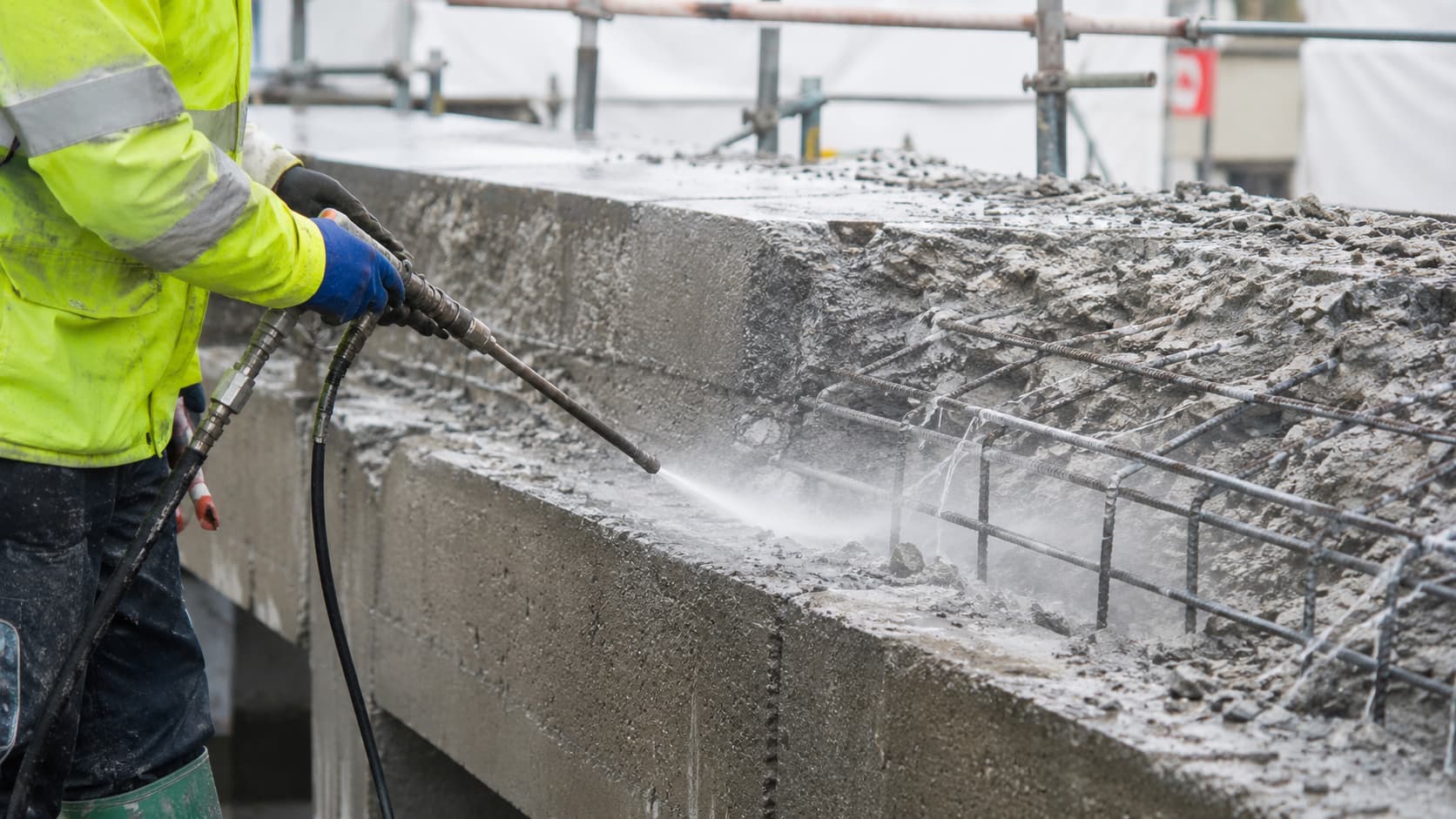
Hydrodemolition uses ultra-high pressure water jets to remove concrete. Rather than breaking it apart through impact, the process relies on water penetrating the surface and targeting weaker or damaged areas within the concrete.
On site, the operator can control pressure and flow to suit the condition of the structure. This allows for a more selective approach. Weakened concrete is removed, while sound material is largely left in place. Reinforcement bars are typically left intact and cleaned as part of the process, rather than being damaged or exposed through impact.
The result is a rough, textured surface that is often ready for repair without additional preparation. This is one of the practical differences that teams often notice, particularly when moving straight into reinstatement works.
Which method offers a better-quality repair?
One of the more noticeable differences between the two methods appears when repairs begin. Traditional breaking can leave a relatively smooth or fractured surface, depending on how the material comes away. In many cases, additional surface preparation is required before new concrete or repair mortars can be applied.
Hydrodemolition, on the other hand, tends to create a consistent, textured finish. This surface profile can help repair materials to bond more effectively. It also reduces the need for secondary preparation in some situations, which can simplify sequencing on site.
Another factor is the condition of the remaining structure. Because hydrodemolition avoids heavy impact, there is less chance of introducing microcracks into the surrounding concrete. Over time, this can influence how well repairs perform, particularly in structures exposed to water ingress or freeze-thaw conditions.
How do safety and site conditions compare?
From a safety and site management perspective, both methods come with their own considerations. Traditional demolition generates dust, noise, and vibration. These need to be controlled, particularly in confined spaces or live environments such as bridges, tunnels, or industrial facilities.
Hydrodemolition replaces dust with water, which changes how the site is managed. Run-off and containment become key considerations, and planning is needed to deal with water and debris safely. However, the reduction in airborne dust can make a noticeable difference, especially in enclosed or sensitive areas.
Noise levels can also vary. While hydrodemolition equipment is not silent, it often avoids the sharp, repetitive impact noise associated with breakers. This can be relevant on sites with nearby operations or public access.
Which method is most cost effective?
Cost comparisons are rarely straightforward, as they depend on the scope of work and site conditions. Traditional demolition equipment can appear more cost-effective at first glance, particularly for straightforward removal tasks.
However, when looking at the full process, differences start to emerge. Overbreak in mechanical demolition can increase the volume of repairs required. Additional surface preparation may also be needed before reinstatement begins. These steps can extend programme durations and introduce extra labour and material costs.
Hydrodemolition can reduce some of these variables. By removing only what is necessary and preparing the surface at the same time, it can streamline later stages of the project. On complex structures or where precision is important, this can influence overall efficiency rather than just the initial removal cost.
Is hydrodemolition the best choice for concrete removal?
When the aim of a project is to preserve structural integrity, minimise damage to surrounding areas, and prepare a surface for high-quality repairs, hydrodemolition offers the best choice for concrete removal. It provides a controlled approach that allows teams to work with the structure rather than against it, making a valuable difference over the lifespan of the asset.
In practice, many projects now consider hydrodemolition earlier in the planning stage, particularly for repair and refurbishment works. It may not be the default choice in every scenario, but in situations where accuracy, surface quality, and long-term performance matter, it is often a method worth serious consideration.