Greenland’s vast mineral deposits have sparked renewed American interest in the Arctic territory.
The narrative sounds compelling: untapped rare earth elements, reduced dependence on China, strategic positioning in the Arctic.
Extracting Greenland’s minerals involves obstacles so significant that industry experts compare it to mining on the moon. For construction professionals, engineers, and architects watching supply chain dynamics, these challenges matter more than political theater.
The Processing Bottleneck
China controls approximately 90% of global rare earth processing capacity.
Raw materials are only half the equation. The bottleneck sits in processing facilities, concentrated in China. Industry experts emphasize that the challenge “is all about processing outside China” rather than mining more deposits.
Without processing capacity, raw materials ship to the same place we’re trying to avoid depending on.
The Geological Challenge
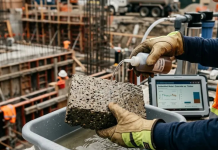
The minerals are encased in eudialyte rock. No one has ever developed a profitable extraction process for this complex rock type.
Elsewhere in the world, rare earths are found in carbonatites, which have proven extraction methods refined over decades. Greenland requires starting from scratch, developing entirely new processes without any guarantee of commercial viability.
The ore concentrations compound this challenge. Greenland’s deposits contain around 1% rare earth content or less. A commercially viable rare earth mine typically requires 3% to 6% content.
Lower concentrations mean processing more rock to extract less mineral, driving up costs and making the entire operation economically questionable.
The Infrastructure Gap
The closest port to Greenland’s major mining sites handles only 50,000 tons of cargo annually. The largest electricity generation capacity is 54 megawatts, located 290 miles away from potential mining operations.
Building roads, railways, ports, and power transmission systems in one of the harshest environments on Earth. Currently, there are few roads and no railways connecting potential mining sites to ports.
Mining operations need reliable power, transportation networks, and logistics systems. None of these exist where Greenland’s mineral deposits sit.
Building this infrastructure means working in temperatures that regularly drop below -40°F. Only 20% of Greenland is ice-free. The construction season is measured in weeks, not months.
The Cost Reality
Mining in the Arctic runs 5 to 10 times more expensive than operations elsewhere on the planet.
One Arctic expert put it bluntly: “You might as well mine on the moon. In some respects, it’s worse than the moon.”
Expert timelines suggest mining operations in Greenland would take 10 to 15 years minimum to become operational. The cost: “billions upon billions upon billions” of dollars, including hundreds of millions just for initial drilling to determine if deposits are even viable.
The Environmental Engineering Challenge
For every ton of rare earths extracted, approximately 2,000 tons of toxic waste are generated.
The extraction process requires toxic chemicals to separate minerals from rock. Greenland’s deposits also contain radioactive uranium alongside rare earth elements, adding environmental and regulatory complexity that increases both costs and timelines.
Building a mine means building a comprehensive waste management and environmental protection system in one of the world’s most sensitive ecosystems. The regulatory approval process alone could add years.
Supply Chain Implications
Greenland isn’t a short-term solution for rare earth supply chains.
The timeline, cost, and technical challenges mean any production from Greenland sits at least a decade away. More realistic assessments push it to 15 years or longer.
Diversification strategies that rely on allied countries with existing infrastructure and processing capacity make more sense than banking on Arctic extraction.
Countries like Australia, Canada, and select African nations already have operational mines and developing processing capabilities. These represent more viable paths to reducing dependence on Chinese supply chains.
Strategic Priorities
The industry needs investment in three areas:
Processing capacity outside China. Building refinement facilities in the United States and allied countries addresses the actual bottleneck in the supply chain.
Recycling infrastructure. Rare earth elements in existing products represent a significant untapped resource that’s far easier to access than new mining operations.
Alternative materials research. Developing substitutes for rare earth elements in critical applications reduces dependence entirely.
These strategies deliver results faster and more cost-effectively than Greenland mining operations.
The Bottom Line
Greenland possesses significant mineral deposits, but possessing resources and extracting them economically are different propositions. The geological challenges, infrastructure requirements, environmental complexities, and processing bottlenecks make Greenland an unlikely solution to current supply chain vulnerabilities.
Plan material sourcing and project timelines based on realistic assessments of supply chain evolution, not political rhetoric about territorial acquisition.
The construction industry moves on practical timelines and economic realities. Greenland’s mineral wealth remains theoretical until someone solves problems that have stumped mining engineers and geologists for years.
Focus on diversifying suppliers, building relationships with processors in allied countries, and staying ahead of material availability trends that affect projects in the next five to ten years.
Greenland might matter eventually. For current planning horizons, it’s a distraction from building resilient supply chains.