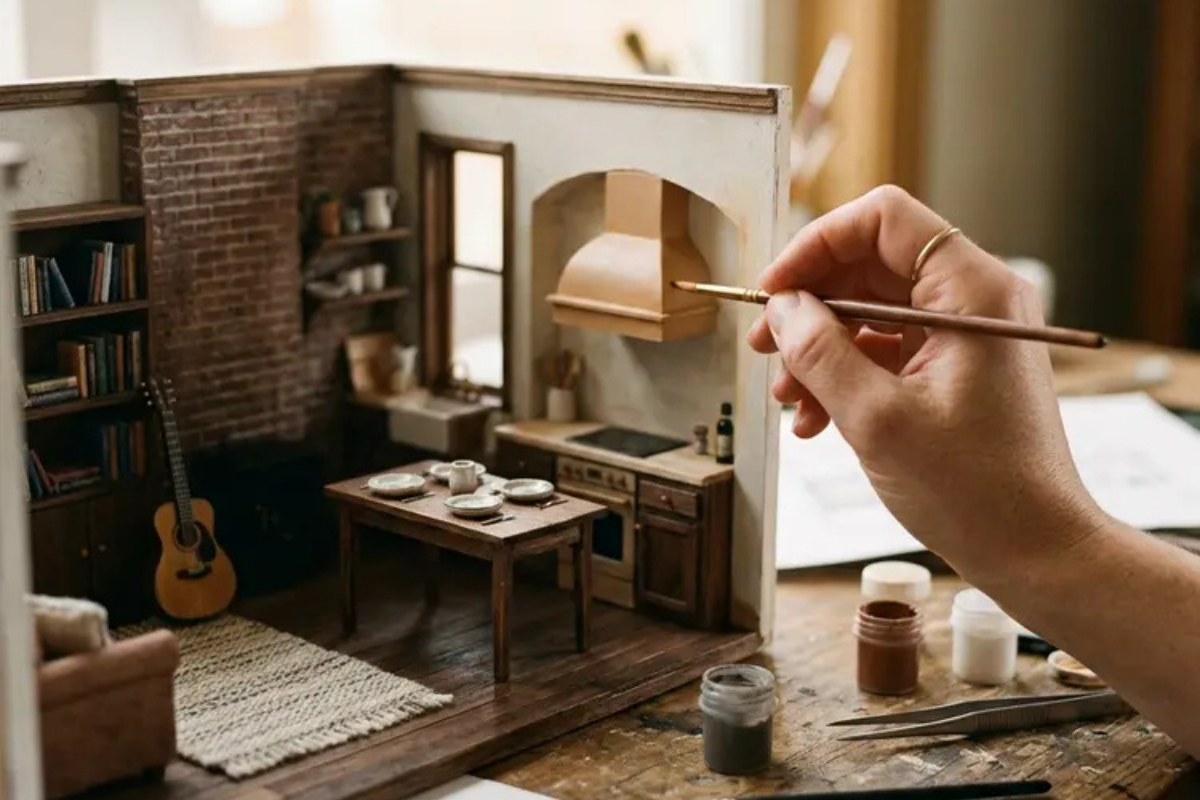
The most revealing design insights don’t always come from million-dollar builds or cutting-edge materials. Sometimes they come from shoebox-sized rooms created for charity.
On April 8, Dallas interior designers will gather at the Neiman Marcus Garden at NorthPark Center for Dec My Room’s “Room To Grow” luncheon. Eight distinguished design studios will auction off miniature dollhouse rooms to benefit children in long-term hospital care.
The event draws inspiration from the Thorne Miniature Rooms at The Art Institute of Chicago, a 1930s collection assembled to “present a visual history of interior design that was both accurate and inspiring.” Design Chair Javier Burkle explains these tiny spaces “set the stage for viewers’ imaginations.”
These miniatures aren’t just whimsical charity items. They’re concentrated expressions of what families actually need from their spaces.
The Data Behind Family-Centered Spaces
Nearly two-thirds of homeowners expect to stay in their homes for 11 years or more.
Nearly two-thirds of homeowners expect to stay in their homes for 11 years or more. Angela Nuessle, national vice president of interior design at PulteGroup (a top-3 home builder), puts it plainly: “2026 is about intentionality and longevity.”
Families aren’t redesigning every few years anymore. They’re making choices that grow with them, renovations that support aging in place and multigenerational living.
This shift shows up in hospital design too. Research shows that creating a stimulating and imaginative environment has a positive effect on the health of hospital patients, guests, and staff. Children’s hospitals are ditching static white walls for jungle-themed exam rooms and engaging environments that reduce stress during uncomfortable physical exams.
The U.S. children’s specialty hospital market is expected to generate $54.7 billion in revenue in 2025. Despite declining birth rates, the need for specialized pediatric care remains significant. Families hold higher expectations for quality care and family-centered design.
Whether it’s a hospital room or a living room, the design priority is the same: spaces that serve families over time.
What Constraints Teach Us About Design Innovation
The best architectural solutions often emerge from the tightest constraints.
Take Jennifer Bonner’s Santa Rosa Beach project on Florida’s Gulf Coast. She designed within stringent Seaside HOA symmetry and materials rules by emphasizing rooflines and geometry and introducing false fronts. The self-shaded porch became the project’s “heart.”
HOA architectural guidelines serve to balance individual expression with communal harmony while protecting property values. Homeowners must submit detailed plans and specifications outlining proposed changes. The goal is to maintain or enhance the overall aesthetic and value of the community while allowing for personalization.
These constraints force creativity. When you can’t solve a problem with square footage or expensive materials, you solve it with thoughtful geometry and spatial hierarchy.
The same principle applies to interior refreshes. Emily Hall Interiors transformed a darker Clayton living space by lightening walls and black window trim, scaling furniture to let original leaded glass and moldings take center stage. The palette: muted blues, corals, yellows, and navies.
The intervention wasn’t dramatic. It was precise.
The Analog Room Movement
Family-first design creates specific requirements for construction professionals.
Homeowners are moving toward “analog rooms” designed for family connection instead of screen time. One Wesley Heights project featured a soundproofed music room with mahogany acoustical panels where families can “simply be together, surrounded by sound instead of screens.”
When not playing music, families enjoy board games and a break from the pull of social media.
This isn’t a trend. It’s a response to a real problem: families want spaces that bring them together physically, not digitally.
Design for this requires soundproofing, acoustics, and flexible layouts that accommodate instruments, games, and conversation. Use materials that absorb sound rather than bounce it around.
The technical requirements are specific and measurable.
Traditional Style Makes a Measurable Comeback
Traditional style rose 5 percentage points among renovating homeowners in 2025 compared with the previous year, according to the U.S. Houzz Kitchen Trends Study.
This signals a renewed appreciation for comfort and craftsmanship. Today’s version feels warm, grounded, and quietly elegant, led by English country and modern Tudor influences.
Design features include:
-
Inset cabinetry
-
Plate racks
-
Arched range hoods
-
Rich woods that bring handcrafted charm
The common thread: materials and details that feel permanent, not trendy.
What This Means for Your Next Project
If you’re bidding on residential work or planning a spec build, these patterns matter.
Families want spaces that adapt. They’re staying longer. They’re adding generations. They’re creating rooms for connection, not just consumption.
Consider a typical family home: four bedrooms, a dedicated study, utility room, and a well-maintained outdoor space. These aren’t luxury features; they’re practical spaces that serve multiple functions as families grow and age in place.
You don’t need to build bigger. You need to build smarter.
Consider:
-
Flexible floor plans that accommodate changing family structures
-
Acoustic treatments for dedicated family gathering spaces
-
Materials that age well and feel handcrafted
-
Storage solutions that reduce clutter and visual noise
-
Natural light that highlights architectural details
The miniature dollhouses at Dec My Room’s charity luncheon represent what happens when designers focus on the human experience of a space rather than just its aesthetic impact.
The Longevity Factor
Angela Nuessle’s comment about intentionality and longevity matters.
When families plan to stay in their homes for over a decade, they think differently about every decision. The paint color needs to work for toddlers and teenagers. The kitchen layout needs to accommodate aging parents and young adults returning home. The backyard needs to serve multiple generations at once.
This changes your material specifications. You’re not choosing finishes for a five-year flip. You’re choosing finishes for a 15-year family timeline.
Durability matters more than novelty. Timelessness matters more than trendiness. Function matters more than flash.
Hospital design research reinforces this. When you create environments that actively support well-being through color, texture, spatial flow, and natural light, you make spaces work better for the people who use them every day.
What I’m Watching
The Dec My Room event is one data point, but a revealing one.
When designers create miniature spaces for children in long-term hospital care, they distill design down to its essence. Every element must justify its presence. Every color choice must serve a purpose. Every spatial decision must enhance the experience.
That’s the standard for full-scale residential construction.
Families are responding to analog rooms. Traditional details are integrating with modern layouts. Architects are navigating HOA constraints while creating distinctive, functional homes.
The industry is adapting to families who want to stay put and build lives, not just houses.
The miniatures at the charity auction will be beautiful. But the real story is what they represent: a design philosophy that puts families first, not as a marketing slogan, but as a measurable priority that shapes every decision from foundation to finish.
That’s the only housing trend that matters.