Ten years after the Paris Agreement promised to keep global warming below 1.5°C, I decided to look closely at what that actually means for our industry.
What I found should seriously concern every builder, architect, and engineer.
The construction and buildings sector consumes 32 percent of global energy and contributes to 34 percent of global CO2 emissions. Cement and steel alone account for 18% of global emissions.
We’re not just participants in the climate crisis. We’re one of the largest contributors.
The Trajectory Gets Worse
Global CO2 emissions from buildings increased 50% between 1990 and 2019. Projections show emissions will more than double again by 2050.
This threatens Paris Agreement goals.
In 2022, over half of construction emissions stemmed from cementitious materials, bricks, and metals. The remaining 37% came from transport, services, machinery, and on-site activities.
Building floor space is expected to double by 2050, with most additions in developing and emerging economies. In 2023 alone, these countries added 51 billion square meters of new floor space—an area almost 500 times the size of Paris.
Every project you build today locks in emissions for decades.
Policy Lags Behind the Problem
Only 26 percent of countries have mandatory building energy codes for the entire sector.
Over 50 percent of newly constructed floor space in emerging and developing economies has no building codes.
Approximately 80 countries have energy codes—a 30% increase since 2015. Too slow.
The Material Choices That Matter Most
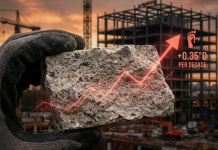
Just three materials—concrete, steel, and aluminum—are responsible for 23% of total global emissions.
Between 50% and 75% of embodied emissions come from concrete and steel in the foundation and structure.
Focus on these materials and cut a project’s carbon footprint significantly.
Low-cost embodied carbon solutions deliver 19 to 46 percent emissions reduction at cost premiums under 1 percent.
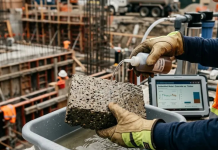
Replace cement with fly ash, ground blast furnace slag, and calcined clays. Universities, government buildings, and commercial projects are already doing this. The barrier isn’t technical—it’s that most specs still default to standard mixes.
Renovation Beats New Construction
Reuse and renovation with system upgrades generates 50% to 75% less embodied carbon emissions than new construction.
Most embodied carbon sits in foundations and structures. I’ve seen renovation projects achieve 60% carbon savings compared to demolition and rebuild. Preserve existing buildings for immediate reductions.
The math is clear.
What This Means for Your Next Project
Ten years in, the Paris Agreement set targets. Construction missed them.
Global emissions continue to rise. The UN projects warming of 2.3–2.5°C with stronger implementation and 2.8°C under current policies.
Here’s what I know: you control project emissions more than policy will for the next decade. Material specifications, renovation priorities, low-carbon concrete choices—these decisions happen on your watch, on every project.
The data shows the industry won’t wait for regulations to catch up. Track embodied carbon on your next project. Specify low-carbon concrete. Consider renovation before new construction. Small shifts in how we build today determine whether construction becomes part of the climate solution or remains the problem.
The professionals who understand this now will lead the projects that matter in five years.