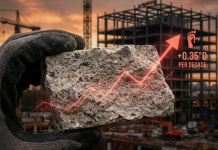
The latest housing numbers show the national median price per square foot dropped 1.2% month-over-month. Active inventory fell 2.5% to 1,072,266 listings. Homes sat on the market for a median of 64 days.
Most headlines call this a crisis. I see an opportunity—if you know where to look.
The Numbers Tell a Different Story
Metro-level data reveals the market isn’t collapsing—it’s normalizing.
San Jose, Oakland, Long Beach, Austin, and Portland saw price declines per square foot. Wichita stayed flat. Louisville bucked the trend with increased listings.
Sales pace tells the real story: San Jose and Louisville moved properties faster, while Austin and Portland slowed. The takeaway? Markets that overheated during the pandemic are correcting, while steady markets remain stable.
Year-over-year inventory increased in San Jose, Wichita, and Louisville. Most areas saw longer selling times compared to last year. Buyers have time to compare options—and builders who offer superior value win.
Why Quality Beats Speed Right Now
Despite the slowdown, the U.S. faces a housing shortage estimated between 1.5 and 5.5 million homes, depending on methodology—the result of a decade of under-building after the Great Recession. Demand remains strong, but buyer expectations have shifted.
Half of real estate agents report working with buyers seeking green homes—up from just 32% a year earlier. Research shows the average buyer is willing to pay $9,292 more upfront to save $1,000 annually on utility costs. That 9:1 ratio isn’t sentiment—it’s math.
With longer selling times, buyers scrutinize everything: insulation R-values, HVAC efficiency ratings, window U-factors, solar readiness. They calculate total cost of ownership, not just purchase price.
Builders focused on efficiency win in this environment. Those racing to deliver volume lose.
The Single-Family Construction Advantage
Total housing starts for 2024 hit 1.36 million, down 3.9% from 2023. But single-family starts climbed to 1.01 million units, up 6.5%.
Overall construction slowed, but single-family building grew. Since 2010, 77% of single-family starts occurred in the South and West, versus 23% in the Midwest and Northeast.
This concentration explains why Austin and Portland face sharper corrections—they absorbed massive pandemic-era growth. Markets like Louisville and Wichita, which grew steadily, remain stable.
Single-family builders in high-growth regions still have opportunities. The strategy has changed: prioritize differentiation over volume.
What I’m Watching in 2025
Real estate markets are fundamentally local. National trends provide context, but your success depends on local conditions. Austin’s correction doesn’t predict Louisville’s trajectory.
Current inventory levels support new construction and modest price growth nationally. The housing shortage has disrupted the normal relationship between supply and demand—creating pockets of opportunity even as headlines warn of slowdowns.
I’m tracking three indicators for 2025:
1. Regional inventory patterns—Which metros are adding supply faster than demand can absorb?
2. Green building adoption—Are energy-efficient features becoming standard or staying premium add-ons?
3. Days on market—Extended selling times signal buyer selectivity, which rewards quality.
What This Means for Your Business
Recent data shows a market shift, not a crisis. Homes take longer to sell. Prices soften in some metros. Inventory adjusts toward balance.
Volume-focused builders face pressure. Quality-focused builders find opportunity.
The 20-month trend of slower sales gives buyers time to be selective. They compare options, calculate long-term costs, and ask detailed questions about efficiency and build quality.
This market rewards builders who can answer confidently—with specifics like Energy Star certification, above-code insulation, high-efficiency HVAC systems, and low-VOC materials.
Unlike previous downturns, underlying demand remains strong because of the ongoing housing shortage. Buyers are choosier about what they buy, not whether they buy.
If you’ve prioritized efficiency and sustainability, you’re positioned well. If you haven’t, start now—buyers will pay more for homes that cost less to operate.