Construction safety data reveals a disturbing pattern. While Americans crank up the air conditioning to escape record heat, workers building and maintaining those cooling systems face a mortality rate that should terrify every contractor.
Construction workers are 13 times more likely to die from heat than workers in other industries.
They represent only 6-7% of the U.S. workforce but account for 34-36% of all occupational heat-related deaths. In 2023 alone, 18 out of 55 heat-related workplace deaths occurred in construction.
The very solutions we install to combat heat—air conditioning systems in every building, home, and vehicle—make the problem worse for the people doing the installation.
The Urban Heat Feedback Loop Nobody Talks About
Air conditioning doesn’t eliminate heat. It moves it.
Research on cities like Phoenix and Paris shows waste heat from AC systems increased mean nighttime urban temperatures by 1-1.5°C. This creates a cascade effect.
Urban heat islands already boost local temperatures by as much as 5°C (41°F) compared to surrounding areas. Add AC waste heat, and you create a feedback loop:
Cities get hotter
Buildings need more cooling
More AC units dump more heat outside
Outdoor workers face even more extreme conditions
The cycle accelerates
Every 1°C increase in the humidex raises the risk of traumatic injuries on job sites by 0.5%. When you’re a cement mason working in direct sun with urban heat islands amplifying temperatures, that percentage compounds into genuine danger.
The people building our climate-controlled comfort die in the heat that those systems create.
First Days Are the Deadliest
Between 50% and 70% of outdoor heat fatalities happen in the first few days of working in warm environments. The body needs time to acclimatize, but construction schedules don’t wait for biology.
Incident reports show the pattern: new hires, seasonal workers returning after winter, laborers switching from indoor to outdoor projects. They show up ready to work, push through the discomfort, and collapse before anyone realizes what’s happening.
In June 2022, a 24-year-old laborer collapsed on a residential construction site in Texas on his third day. Temperature: 96°F. He’d told his supervisor he felt dizzy an hour earlier, but kept working. He died before the ambulance arrived. OSHA later cited the contractor for failing to provide adequate water and rest breaks.
OSHA data shows workers have died of heat stroke when the day’s maximum heat index was only 86°F well below temperatures that trigger public heat advisories. The difference? Exertion, solar load, and construction-specific conditions create danger even at moderate temperatures.
Construction heat exposure isn’t a hot day at the beach.
The Trades Where Heat Kills Most
Analysis of construction heat deaths from 2011-2016 reveals which trades face the highest risk:
Cement masons: More than 10 times higher risk of heat-related death
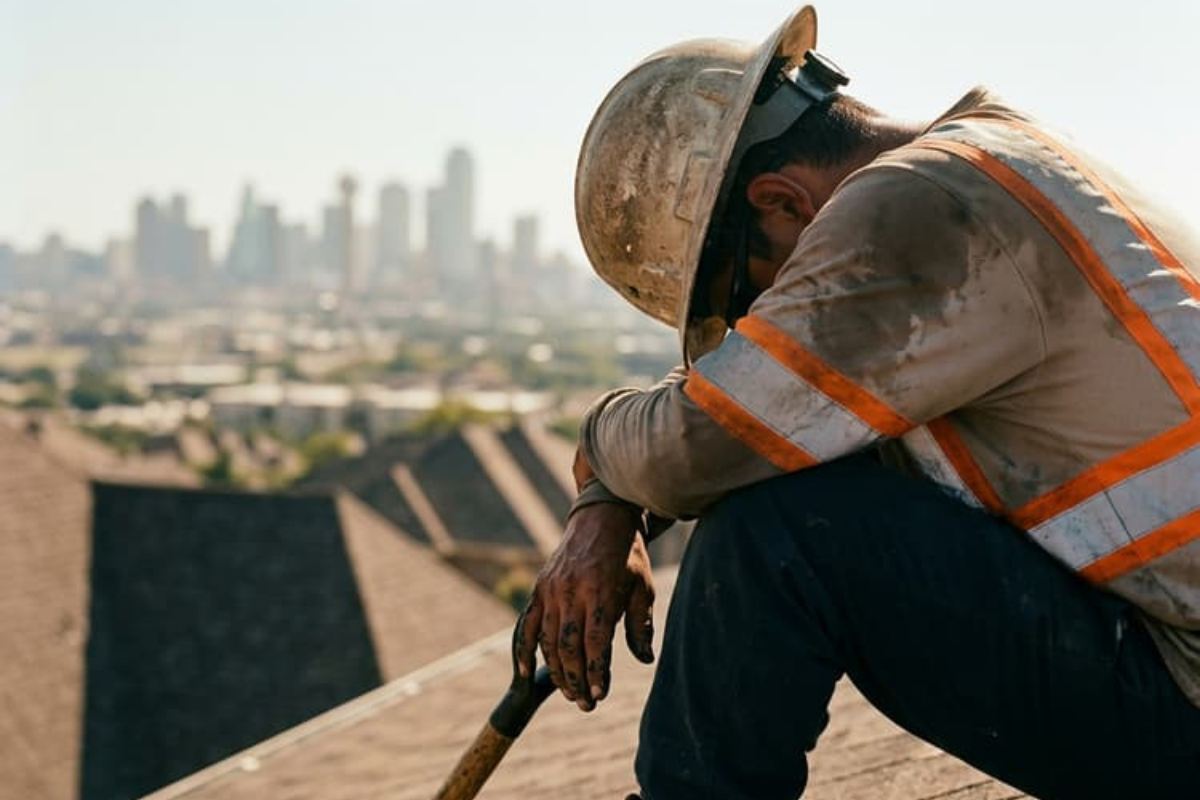
Roofers and helpers: Nearly 7 times higher risk
Also elevated: Brick masons, construction laborers, HVAC mechanics
These workers combine intense physical labor with direct sun exposure and, often, heat-generating equipment. A roofer in July works on surfaces that reach 170°F, surrounded by reflective materials, wearing full safety gear that prevents cooling.
HVAC mechanics face a cruel irony. They install cooling systems while working in attics, mechanical rooms, and rooftops where temperatures regularly exceed 120°F. The equipment they’re connecting will cool the building’s occupants. They get the waste heat.
The Productivity Crisis Nobody’s Pricing In
A 2024 study found that 60% of construction workers experienced productivity loss when wet bulb globe temperature exceeded 28°C. The Federal Reserve Bank of San Francisco projects a 5.4% reduction in U.S. economic output tied to heat impacts.
Worker conditions:
63% of construction workers start shifts already dehydrated
43% experience unsafe core body temperatures exceeding 38°C (100.4°F) during summer work
Heat-related illnesses have increased by more than 50% over the past three years
Labor costs are rising. Fewer recognize that heat drives part of that increase. When workers can only safely perform at 60% capacity during summer months, you need more workers, longer timelines, or both.
The math doesn’t work if you ignore the problem.
Federal Standards Are Finally Coming
In August 2024, OSHA published its first-ever proposed federal heat safety standard. The rule would protect approximately 36 million workers across construction, maritime, agriculture, and general industry.
Key provisions:
Initial heat trigger at 80°F heat index
Mandatory Heat Injury and Illness Prevention Plans (HIIPP)
Stricter protections at 90°F, including paid rest breaks every two hours
Acclimatization protocols for new and returning workers
OSHA’s Heat National Emphasis Program has already conducted approximately 7,000 heat-related inspections between April 2022 and December 2024. The agency issued over $2 million in heat-related penalties in 2024 alone.
The rulemaking process typically takes up to two years, meaning final standards could be finalized as early as 2026. Contractors who wait for enforcement to begin will face both compliance costs and competitive disadvantage.
What Adaptation Actually Looks Like
Contractors have shifted summer work schedules to start at 5 AM and end by 1 PM. Others invested in misting stations, cooling vests, and electrolyte programs. Some redesigned workflows to rotate workers between high-heat and lower-heat tasks throughout the day.
The solutions aren’t rocket science. They’re logistics, planning, and a willingness to acknowledge that business as usual kills people.
Effective heat safety programs include:
Mandatory acclimatization periods for all workers (not just new hires)
Scheduled rest breaks in shaded or air-conditioned spaces
Free access to water and electrolyte drinks throughout shifts
Training supervisors to recognize early heat illness symptoms
Weather monitoring with work modification triggers
Buddy systems to ensure no one works alone in extreme heat
The Federal Reserve study showing 63% of workers starting shifts dehydrated points to a simple fix: provide hydration before work begins. Some contractors require workers to consume a minimum amount of water or an electrolyte drink before clocking in.
Small changes. Measurable impact.
The Long-Term Health Question
Emerging biomedical research suggests prolonged heat exposure may accelerate biological aging through epigenetic changes. For construction workers facing decades of summer heat exposure, this raises questions about long-term health outcomes that go beyond immediate safety concerns.
Older adults face roughly 900 hours per year of unsafe outdoor conditions—up from about 600 hours in 1950. For workers in their 50s and 60s with careers in construction, cumulative exposure may create health impacts we’re only beginning to understand.
This matters for workforce planning, insurance costs, and retirement benefits. The true cost of heat exposure extends decades beyond the day someone collapses on a job site.
The Climate Reality Construction Can’t Ignore
Scientists attribute current heat trends to continued warming driven by fossil fuels. South and Southwest Asia, parts of Africa and the tropics, Australia, and the Southwestern United States face the worst impacts.
For U.S. construction, the Southwest—one of the fastest-growing regions for building—faces the most severe heat challenges. Phoenix, Las Vegas, Tucson, and Albuquerque aren’t getting cooler. Demand for new construction in these cities isn’t declining.
You can’t build in 120°F heat using 1990s safety protocols.
Roughly one-third of the global population lives in areas where heat significantly restricts daily physical activity. Construction doesn’t have the luxury of restricting activity. Buildings still need to go up. Infrastructure still needs maintenance. The work continues regardless of temperature.
The question is whether the industry adapts proactively or waits for regulation, litigation, and labor shortages to force change.
Three Things to Do Monday Morning
1. Audit your current heat safety protocol. Walk your active job sites during peak heat hours. Count water stations. How long does it take workers to access shade? If you don’t have a written heat illness prevention plan, you’re already behind.
2. Implement pre-shift hydration checks. Require supervisors to verify workers are hydrated before starting work. Simple urine color charts cost nothing and catch 63% of the dehydration problem before it becomes a job site emergency.
3. Review your summer scheduling. Calculate the cost of shifting high-risk work to cooler hours versus the cost of heat-related injuries, turnover, and OSHA penalties. Early-start schedules pay for themselves in productivity alone.
Insurance companies now classify heat as a systemic risk that amplifies other perils. When insurers treat heat like hurricanes or earthquakes—as a fundamental risk requiring different modeling and pricing—your costs will shift accordingly.
The feedback loop between air conditioning and urban heat won’t resolve itself. Cities will keep getting hotter. Buildings will keep needing more cooling. Workers installing those systems will face increasingly dangerous conditions unless we rethink summer construction practices.
The paradox is complete: We’re building climate control systems that make the climate worse for the builders. The question is whether you adapt now or wait for OSHA, insurance carriers, and an evaporating labor pool to force your hand.