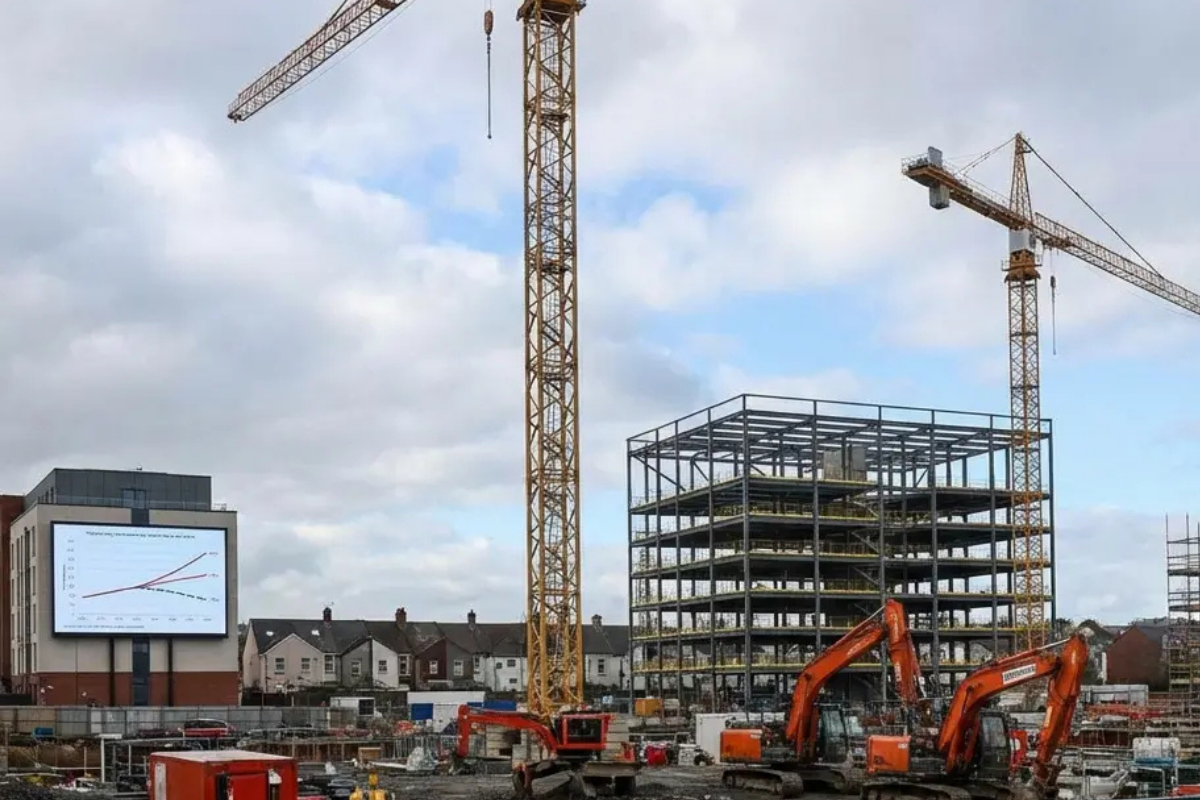
From 2010 to 2023, housing supply in New York City increased by only 4%. Jobs increased by 22%. That’s not a mismatch. That’s a construction failure.
Last week, I reviewed apartment listings across the city to understand what this failure looks like on the ground.
A high-rise between Chelsea and NoMad: Hotel-style concierge. Fitness center. Cloud Lounge. On-site restaurant. Monthly amenity fee of $135. Pet fees are around $100. Studios start at $3,800. One-bedrooms at $5,200.
A modest two-bedroom in Staten Island: Freshly painted, new appliances, backyard access. No washer or dryer. $2,400 a month.
The same question kept coming up: Are these luxury amenities masking something deeper?
The Numbers Tell a Different Story
While developers race to add pet spas and Cloud Lounges, the construction industry faces a crisis of its own making.
From 2010 to 2023, housing supply in New York City increased by only 4%. Jobs increased by 22%.
Construction trends show a supply-demand imbalance more severe than any other major American city.
The rental vacancy rate tells the rest of the story. In 2023, it fell to just 1.4%. That’s the tightest housing market in over 50 years. For apartments renting below $1,650, the vacancy rate was less than 1%.
Construction professionals are building, but not enough. And what gets built isn’t serving the people who need it most.
The Affordability Math Doesn’t Work
The median asking rent in NYC hit $3,500 per month in 2023. To afford that without being rent-burdened, you need an annual income of $140,000.
The median household income in the city? Around $75,000.
That’s a gap of $65,000. That’s not an affordability challenge. That’s an affordability barrier affecting millions of residents.
New buildings keep appearing with high-end finishes and premium amenities. Concierge services. Rooftop lounges. State-of-the-art fitness centers. These features drive up construction costs and push rents higher.
Meanwhile, income-restricted buildings struggle to meet demand. The Boerum Hill listing I mentioned earlier requires applicants to fall within strict income and asset limits. That’s not because developers want to be exclusive. It’s because the economics of affordable housing construction in NYC are broken.
Construction Has Ground to a Halt
In May 2024, NYC developers filed only 36 permits for multifamily buildings. That’s the lowest monthly count in a decade, excluding pandemic lockdowns.
The expiration of the 421-a tax incentive changed everything. High borrowing costs made it worse. Apartment construction has come to a near-halt despite unprecedented demand.
Conversations with developers reveal the same story. The math doesn’t work. Building affordable housing in NYC requires subsidies, tax incentives, or both. When those disappear, construction stops.
The extension of the 421-a construction completion deadline from June 2026 to June 2031 saved approximately 71,000 new apartments across nearly 650 buildings. That includes 21,000 affordable units. Without that policy intervention, those projects would have been abandoned.
That’s not a construction success story. That’s a last-minute rescue of projects that should never have been at risk.
Luxury Conversions Are Eating the Housing Stock
In the West Village, one out of every six small apartment buildings has been converted to single-family homes since 2004.
Citywide, at least 9,300 housing units have been lost to single-building roll-ups since 2004. Another 169 units disappeared through combinations of two or more buildings since 2010.
During a severe housing shortage, we’re removing affordable multi-family housing from the market and converting it into luxury single-family residences.
This trend is accelerating. Developers buy small apartment buildings, combine units, and create mega-mansions for ultra-wealthy buyers. The economics make sense for them. Buy a building with six units, convert it to one massive residence, and sell it for tens of millions.
But every conversion removes housing units during a crisis. We’re moving in the wrong direction.
Even “Affordable” Housing Isn’t Affordable
Landlords of subsidized housing filed more than 43,000 eviction lawsuits in 2024. That accounts for over a third of the city’s roughly 120,000 eviction filings.
The majority of more than 38,000 cases were for nonpayment of rent.
Even in subsidized housing with regulated rents, tenants can’t afford to pay.
Affordable housing developments reveal a harsh truth. The term “affordable” has become meaningless. When household budgets are squeezed this tight, even below-market rents become unaffordable.
The construction industry built these units with the best intentions. We followed the guidelines, met the income restrictions, and delivered housing at regulated rates. But we can’t solve an affordability crisis when median incomes are half of what’s needed to afford median rents.
The Amenity Arms Race Continues
Despite all of this, new luxury buildings keep adding more amenities.
Pet spas. Virtual doormen. Cloud lounges. Co-working spaces. Rooftop gardens. Wine cellars. Golf simulators.
These features look great in marketing materials. They help buildings stand out in a competitive rental market. They justify higher rents and attract wealthy tenants.
But they don’t solve the housing crisis. They make it worse.
Every dollar spent on luxury amenities is a dollar not spent on building more units. Every high-end finish drives up construction costs and pushes projects further from affordability.
I’m not saying amenities are bad. Residents deserve quality housing with modern conveniences. But we’ve lost sight of the primary goal: providing enough housing for everyone who needs it.
What Construction Professionals Need to Understand
The housing crisis isn’t just a policy problem or a market failure. It’s a construction industry problem.
We’ve optimized for luxury over volume. We’ve chased higher margins instead of higher unit counts. We’ve built for the top 20% of income earners while the other 80% scramble for a limited supply.
The 4% increase in housing supply from 2010 to 2023 is our report card. We failed.
The challenges are real. Rising material costs. Labor shortages. Complex zoning regulations. Expensive land. Tight financing. These are genuine barriers.
Other cities have figured it out. Tokyo streamlined zoning to allow dense construction citywide. Minneapolis eliminated single-family zoning. Vienna built social housing at scale through public investment. They’ve prioritized volume over luxury.
New York City can do the same. But it requires the construction industry to shift focus.
The Path Forward
The solution isn’t complicated. We need to build more housing. A lot more housing. And we need to build it faster and at lower price points.
That means simpler designs. Fewer luxury amenities. Standardized construction methods. Modular building techniques. Anything that reduces costs and accelerates timelines.
The 421-a extension saved 71,000 units. That’s a start, but it’s not enough. We need similar policy interventions that make affordable housing construction financially viable.
We need to stop converting multi-family buildings into single-family mansions. Every unit lost makes the crisis worse.
We need to prioritize construction permits for affordable housing projects. The 36 permits filed in May 2024 is unacceptable. We should be filing hundreds per month.
And we need to be honest about what “affordable” means. If median household income is around $75,000 and median asking rent is $3,500, we’re not building affordable housing. We’re building luxury housing with an affordability label.
Who Pays the Price
Maria Torres has worked as an operating engineer on Manhattan construction sites for 12 years. She helped build luxury high-rises in Hudson Yards. Buildings with infinity pools and private cinema rooms. Buildings she could never afford to live in.
She commutes two hours each way from the Bronx. Her rent just increased to $2,100 for a one-bedroom. That’s 40% of her gross income. She’s one unexpected expense away from housing instability.
She’s not alone. Construction workers, teachers, nurses, service workers—the people who keep the city running—are being priced out of the city they’re building.
What to Watch
Permit filings will show whether developers respond to policy changes or remain stuck at record lows. Conversion trends will reveal if we’re protecting existing housing stock or continuing to lose multi-family units to luxury roll-ups. Eviction rates in subsidized housing will indicate whether our definition of “affordable” has any meaning. And the amenity arms race will demonstrate whether new buildings prioritize simpler, more affordable construction or double down on luxury features.
The Bottom Line
Luxury amenities aren’t the problem. They’re a symptom.
The real problem is that we’ve built a construction industry optimized for high-end housing in a city desperate for affordable units.
We’ve created a system where pet spas and Cloud Lounges make financial sense, but building housing for teachers, nurses, and service workers doesn’t.
That’s not sustainable. It’s not ethical. And it’s not serving the city we claim to be building for.
The construction industry has the skills, experience, and resources to solve this crisis. We’ve built some of the most impressive structures in the world. We can build affordable housing at scale if we choose to.
But only if we choose to.
The question isn’t whether we can fix NYC’s housing crisis. The question is whether we will. Right now, the evidence suggests otherwise.